Daily-current-affairs
/
23 Oct 2020
UN Nuke Ban Treaty : Daily Current Affairs
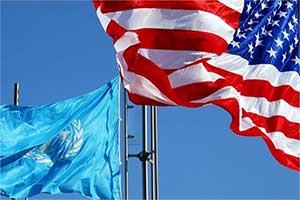
UN Nuke Ban Treaty
Why in NEWS ?
- The United States is urging countries that have ratified a UN treaty to ban nuclear weapons
to withdraw their support as the pact nears the 50 ratifications needed to trigger its entry
into force, which supporters say could happen in last week of October 2020.
About
- The US letter to signatories, obtained by The Associated Press, says the five original
nuclear powers — the US, Russia, China, Britain and France — and America’s NATO
allies "stand unified in our opposition to the potential repercussions" of the treaty.
- It says the treaty "turns back the clock on verification and disarmament and is
dangerous" to the half-century-old Nuclear Non-proliferation Treaty, considered
the cornerstone of global non-proliferation efforts.
- The treaty requires that all ratifying countries "never under any circumstances,
develop, test, produce, manufacture, otherwise acquire, possess or stockpile
nuclear weapons or other nuclear explosive devices."
- It also bans any transfer or use of nuclear weapons or nuclear explosive devices —
and the threat to use such weapons — and requires parties to promote the treaty to
other countries.
- According to Beatrice Fihn, executive director of the International Campaign to
Abolish Nuclear Weapons, the 2017 Nobel Peace Prize-winning coalition whose work
helped spearhead the nuclear ban treaty, "The Non-proliferation Treaty is about
preventing the spread of nuclear weapons and eliminating nuclear weapons, and this
treaty implements that. There’s no way you can undermine the Non-proliferation
Treaty by banning nuclear weapons. It’s the end goal of the Non-proliferation
Treaty". And "That the Trump administration is pressuring countries to withdraw
from a United Nations-backed disarmament treaty is an unprecedented action in
international relations,"
- The number of important initiatives, including US-Russia talks on renewing the New
Start Treaty limiting deployed nuclear warheads, missiles and bombers and next
year’s review conference of the Nuclear Non-proliferation Treaty will all converge in
the same direction, and the final objective must be to have a world with no nuclear
weapons.
The Treaty on the Prohibition of Nuclear Weapons (TPNW)
- The treaty was approved by the 193-member UN General Assembly on July 7, 2017
by a vote of 122 in favour, the Netherlands opposed, and Singapore abstaining.
Among countries voting in favour was Iran.
- The five nuclear powers and four other countries known or believed to possess
nuclear weapons — India, Pakistan, North Korea and Israel — boycotted
negotiations and the vote on the treaty, along with many of their allies.
- The Treaty on the Prohibition of Nuclear Weapons (TPNW), or the Nuclear Weapon
Ban Treaty, is the first legally binding international agreement to comprehensively
prohibit nuclear weapons, with the goal of leading towards their total elimination.
- In order to come into effect, signature and ratification by at least 50 countries is
required.
- As of 20 October 2020, 47 states have ratified the treaty and needs 50 ratifications
to trigger its entry into force in 90 days.
- The treaty prohibits the development, testing, production, stockpiling, stationing,
transfer, use and threat of use of nuclear weapons, as well as assistance and
encouragement to the prohibited activities.
- The treaty will be "a really big deal" because it will become part of international law
and will be raised in discussions on disarmament, war crimes and weapons.
India’s Stand on TPNW
- India abstained from voting: India maintained that it recognises the "Geneva-based
Conference on Disarmament"- (CD) as the single multilateral disarmament
negotiation forum & it is not convinced of the potential of the current treaty to
address the disarmament issue.
- It was "not convinced" that the proposed conference could address the longstanding
expectation of the international community for a comprehensive instrument on
nuclear disarmament
The Non-Proliferation Treaty (NPT)
- The NPT sought to prevent the spread of nuclear arms beyond the five original
weapons powers(USA, Russia, France, Britain and China)
- It requires non-nuclear signatory nations to not pursue atomic weapons in exchange
for a commitment by the five powers to move toward nuclear disarmament and to
guarantee non-nuclear states’ access to peaceful nuclear technology for producing
energy.
India’s Stand on NPT
- India is one of the only five countries that either did not sign the NPT or signed but
withdrew, thus becoming part of a list that includes Pakistan, Israel, North Korea,
and South Sudan.
- India always considered the NPT as discriminatory and had refused to sign it.
- India has opposed the international treaties aimed at non-proliferation since they
were selectively applicable to the non-nuclear powers and legitimised the monopoly
of the five nuclear weapons powers.
Geneva based Conference on Disarmament (CD)
- The CD is a multilateral disarmament forum established by the international community
to negotiate arms control and disarmament agreements based at the Palais des Nations
in Geneva.
- The Conference meets annually in three separate sessions in Geneva.
- The Conference was first established in 1979 as the Committee on Disarmament as the
single multilateral disarmament negotiating forum of the international community.
- It was renamed the Conference on Disarmament in 1984.
India’s Stand on CD
- India has supported the holding of negotiations on a Comprehensive Nuclear Weapons
Convention at the Conference on Disarmament (CD).
- India reiterated its commitment to the disarmament of nuclear weapons in a step-by-
step non-discriminatory process.
- India also remains committed to negotiations regarding a Fissile Material Cut-off Treaty
in the CD on the basis of the report of the Special Coordinator or CD/1299 which dates
to March 24, 1995.




